
Brunswick County Court Records After Jail Arrest
A Brunswick County jail booking and a Brunswick County criminal court case are connected, but they are maintained by different offices. The booking side is handled through the Brunswick County Sheriff's Office and the Brunswick County Detention Center. The court side belongs to the North Carolina Judicial Branch and the Brunswick County Clerk of Superior Court. Once someone is arrested and booked, the court record develops through the filed criminal process, bond orders, hearings, prosecutor decisions, and case disposition.
The arrest-to-court path matters because the jail roster can show charge or hold reasons before the formal case is complete. A roster line may list an arrest date, charge text, and bond information known to detention staff, while the court case shows what the prosecutor and court do with those accusations. For current custody and booking-side details, use the county roster and related jail inmate records; for booking-photo context, use jail roster mugshots. For the filed criminal case, use the court search channels below.
Arrest, Booking, First Appearance, and Filed Court Records
The usual sequence starts with an arrest by the sheriff's office, a municipal police department, or another law-enforcement agency operating in Brunswick County. The person is booked into the Detention Center if held locally. Booking creates the custody snapshot: identifying information, arrest date, charge or hold reasons, and bond details when available. The first appearance or magistrate stage can address probable cause, release conditions, bond, and the next court date.
After that point, the District Attorney reviews the law-enforcement allegations and decides how the case should proceed. Charges can be filed, reduced, amended, dismissed, sent forward by indictment, or resolved through plea or trial. The court record is the authoritative follow-up for what charges were actually pursued after the jail arrest. It may not match the first booking text word for word because prosecutors can change charges as evidence, criminal process, or grand-jury action develops.
- Arrest and booking at Brunswick County Detention Center.
- Initial charge or hold reasons and bond information enter the jail system.
- Magistrate or first-appearance review addresses bond and early court scheduling.
- The District Attorney reviews law-enforcement allegations and decides what charges to prosecute.
- The case appears in the North Carolina court system with case number, defendant, charges, court dates, and status.
- The final court record may show guilty, dismissed, not guilty, deferred, conditional, amended, or other disposition language.
How to Search Court Records After an Arrest in Brunswick County
Brunswick County criminal case information is searched through North Carolina court resources, not through county government general public-records staff. The NC Judicial Branch services page points users to Portal services for court records, hearing dates, case information, and payments. The NC Courts Brunswick County page is the official county court entry point for local court information.
The NC Courts court-records instructions also describe public self-service terminals and paper files. Criminal case information can be searched at a public terminal located at a clerk's office, including by defendant name, case number, or victim or witness name. Paper files are accessed by visiting the clerk's office in the county where the case is located, and copies may require a fee.
The NC Courts court-records instructions explain the Portal, public clerk terminals, and paper-file access in one place.
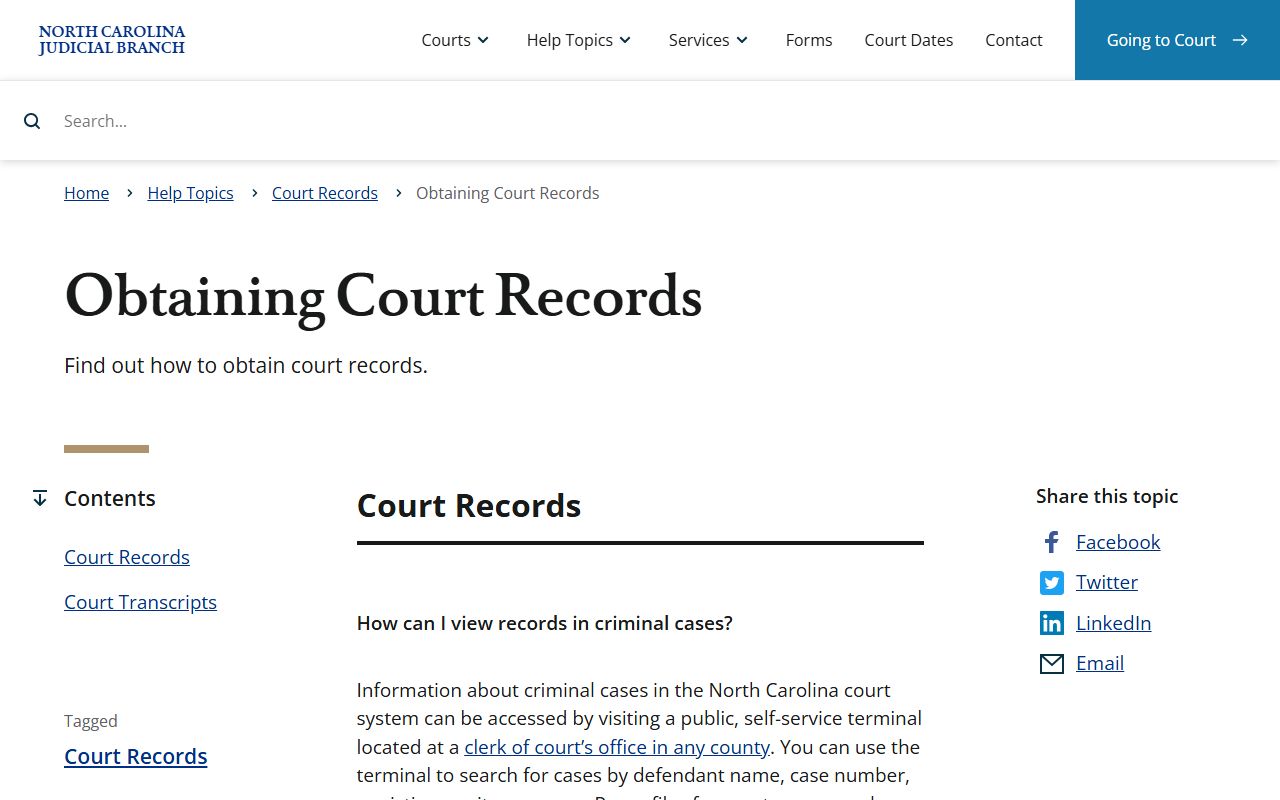
That statewide guidance is the best match when a Brunswick County arrest has already become a criminal case and the user needs court status rather than jail custody status.
| Search Field or Channel | How It Is Used | Notes for Brunswick County |
|---|---|---|
| Smart Search / court records search | Searches case information through the NC Courts Portal. | Use Brunswick County as the local filter when narrowing statewide results. |
| Defendant name | Finds cases tied to the person charged. | Try full legal name first, then fewer name parts if results are thin. |
| Case number | Goes directly to a known court case. | Useful when the case number is listed on a notice, citation, bond paperwork, or clerk document. |
| Victim or witness name | Available on public self-service terminals according to NC Courts guidance. | This may be useful when the defendant name is uncertain, but privacy limits can still apply. |
| Hearing date / court date | Checks scheduled appearances and calendars. | Confirm dates close to the hearing because schedules can change. |
| Paper case file | Reviewed at the Clerk of Superior Court in the county where the case is located. | Use for older files, filings not visible online, and certified-copy needs. |
Clerk, Magistrates, and District Attorney Contacts
The court office address for Brunswick County is the Brunswick County Courthouse and Clerk of Court's Office, 310 Government Center Drive NE, Unit 1, Bolivia, NC 28422. The Clerk of Superior Court main number is 910-253-3900. The criminal division is listed at 910-253-3902, and magistrates are listed at 910-253-3919. Those contacts are the local path for criminal case status, court-file access, paper copies, and questions about court process after an arrest.
The prosecutor is separate from the clerk. Brunswick County is in North Carolina Prosecutorial District 15, which covers Bladen, Brunswick, and Columbus counties. The official district attorney page names District Attorney Jon David. The Brunswick office is listed at the Brunswick County Courthouse, 310 Government Center Drive, Unit 2, Bolivia, NC 28422, phone 910-253-3910, fax 910-253-3927. The District Attorney represents the State and is the office associated with prosecution decisions after a jail arrest.
The NC Judicial Branch Brunswick County page gives the local courthouse entry point before a user moves into the broader court-records search tools.
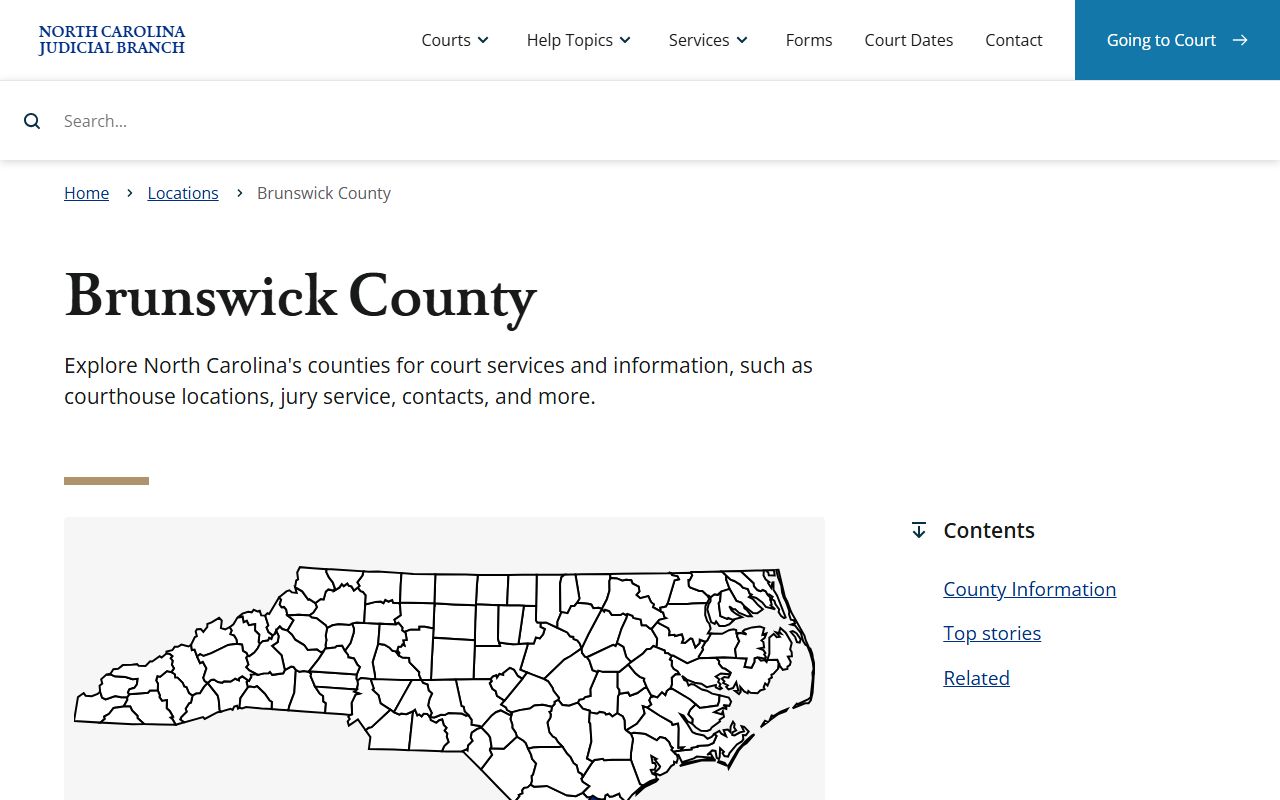
Use that county court page together with the Portal, clerk terminal, or clerk office when a booking record has turned into a pending or disposed criminal case.
Charging Documents After an Arrest: Complaint, Information, and Indictment
Charges can enter the court record through different criminal documents. The exact document depends on the offense, procedural stage, and prosecutor or grand-jury action. A complaint or criminal process may appear early. An information is a prosecutor-filed charging document. An indictment is returned by a grand jury and is especially important for felony prosecution. These documents are court records, while the jail booking entry remains a custody record.
| Document | Who Uses or Files It | What It Means After a Jail Arrest |
|---|---|---|
| Complaint or criminal process | Law enforcement, magistrate, or prosecutor depending on process. | Starts or supports the allegation that moves from arrest into court. |
| Information | District Attorney. | States charges the prosecutor is pursuing without relying on the initial booking text alone. |
| Indictment | Grand jury. | Formal felony charging action that can replace or refine earlier charge descriptions. |
Charge Status in Court Records After Arrest
Charge status can change as a Brunswick County case moves through court. Booking charges may be amended, reduced, added to, or dismissed after the District Attorney reviews the case. A charge can also resolve through a guilty plea, trial verdict, deferred arrangement, conditional discharge where allowed, or another disposition. Read each charge separately because one case can contain several charges with different outcomes.
| Status | Meaning in the Court Record | Why It Matters |
|---|---|---|
| Pending | The charge is still active and has not reached final disposition. | Future court dates, bond conditions, or prosecutor action may still change the case. |
| Amended or reduced | The filed charge changed from the original or earlier version. | The court charge may no longer match the jail roster's first charge text. |
| Dismissed | The charge was ended without a conviction on that charge. | Dismissal can affect expunction eligibility, but the public record may not disappear automatically in every context. |
| Guilty / conviction | The charge resulted in a guilty plea or finding. | This is different from a mere arrest or accusation and can carry sentence, probation, fines, or custody consequences. |
| Not guilty | The defendant was found not guilty on that charge. | North Carolina expunction law may be relevant for eligible not-guilty outcomes. |
| Deferred or conditional | The case is handled through a court-approved condition or program before final outcome. | Check the specific court record because the final result depends on completion and court order. |
Bond and Release Records After a Brunswick County Arrest
Bond information often sits between the jail record and the court record. The Brunswick County Sheriff's Office detention policies page says there are three ways to post bond at the Brunswick County Detention Center: hire a bail bondsman, post cash, or post a property bond. The sheriff's policy states that a bondsman fee is typically 15% of the total bond amount. It also says a property bond greater than $4,999 requires the person posting it to hire an attorney to prepare a Deed of Trust.
Before paying or traveling, verify current bond stipulations directly with the Detention Center at 910-253-2760 or through the official inmate search. The roster may place bond details inside the charge or hold-reasons text, rather than in a separate bond column. Multiple charges, failure-to-appear matters, probation or parole holds, federal holds, ICE holds, or another agency's warrant can affect release even when one bond amount is visible.
| Bond Type | Brunswick County Practical Meaning | Verification Point |
|---|---|---|
| Cash bond | The full cash amount is posted directly as required by the court or magistrate. | Confirm amount and payment rules with detention staff before arrival. |
| Surety / bondsman | A licensed bondsman posts a guarantee. BCSO says the fee is typically 15% of the total bond amount. | Verify the bond type and any separate holds before paying a bondsman. |
| Property bond | Real property is pledged to secure release. | BCSO states property bonds over $4,999 require an attorney-prepared Deed of Trust. |
| Secured bond | Release requires money, property, or surety before the person can leave custody. | This type was observed in Brunswick roster charge text in the research file. |
| PR or unsecured release | Possible in North Carolina practice, but not specifically described on the BCSO bonding page. | Do not assume it applies to a particular inmate without court or jail confirmation. |
| No-bond hold or other agency hold | A separate warrant, failure to appear, detainer, or hold can prevent release. | Call 910-253-2760 and check court records for the linked case or order. |
Warrants That Lead to Arrest and Court Records
The official warrant source located in the research was the Brunswick County Sheriff's Office Civil & Warrant Division page. That division serves and executes legal process generated by the court system, including summonses, subpoenas, domestic violence injunctions, evictions, and arrests of wanted subjects on outstanding warrants. No official public active-warrant search database was found on the BCSO website during the research.
If a warrant has already led to a booking, the jail roster may show a warrant-related charge or hold reason. If it has become a criminal case, search the NC Courts Portal, a clerk self-service terminal, or the paper file at the clerk's office. For warrant-process questions, use the sheriff main number 910-253-2777, detention at 910-253-2760 after booking, magistrates at 910-253-3919 for court-process questions, or the clerk criminal division at 910-253-3902 for case status.
Charges vs. Convictions in Court Records After Arrest
An arrest and a filed charge are accusations, not proof of guilt. A conviction requires a guilty plea, guilty finding, or other court result that legally establishes guilt on a charge. This distinction is especially important when comparing jail records to court records. The jail can show why a person was held, while the court file shows whether each charge remained pending, was changed, was dismissed, or resulted in a conviction.
| Question | Charge | Conviction |
|---|---|---|
| Legal stage | Accusation filed or carried in the case. | Final guilty outcome by plea, finding, or verdict. |
| Proof level | Can begin from probable cause or formal charging action. | Requires the legal standard and court process for guilt. |
| Record meaning | Shows what the person was accused of after arrest. | Shows what the person was legally found or admitted guilty of. |
| Possible outcome | May be pending, dismissed, amended, reduced, or carried forward. | May produce sentence, probation, fines, custody, or other judgment. |
| Search caution | Should not be described as guilt. | Still should be verified against the official court record and final disposition. |
Sealed vs. Expunged Court and Arrest Records
North Carolina public-access rules treat several record categories differently. N.C. Gen. Stat. 132-1 defines public records broadly. N.C. Gen. Stat. 132-1.4 excludes criminal investigation and intelligence records from ordinary public-record status, while making certain arrest information public unless another law prohibits release. Juvenile records, sealed materials, protected victim information, and active-investigation materials can be withheld or restricted.
For eligible dismissed or not-guilty outcomes, N.C. Gen. Stat. 15A-146 addresses expunction of records after dismissals or findings of not guilty or not responsible, including automatic procedures for certain post-December 1, 2021 dispositions. N.C. Gen. Stat. 15A-151 governs confidential retention and limited disclosure of expunged court records. A person seeking to clear an eligible arrest or court record should rely on the court process, not a request to a private website or a jail roster alone.
| Record Treatment | What It Usually Means | North Carolina Context |
|---|---|---|
| Public court record | Case information is available through Portal, clerk terminal, or paper file unless restricted. | Access can vary by case type, filing type, age of file, and confidentiality law. |
| Sealed record | The record exists but is hidden from general public inspection by law or court order. | Some authorized officials may still have access depending on the order or statute. |
| Expunged record | The public record is removed or treated as cleared under an expunction order. | North Carolina statutes provide eligibility rules and confidential retained-record limits. |
| Criminal investigation record | Investigative material may be withheld even when basic arrest information is public. | N.C. Gen. Stat. 132-1.4 is the key public-access boundary for law-enforcement investigative files. |
Background Check Limits for Court Records After Arrest
Searching one Brunswick County criminal case is different from ordering a statewide criminal-history report or using a regulated background-check product. NC Courts provides criminal background-check guidance under its court-records materials, but a court case lookup is still a case lookup. It should not be used as a substitute for legally compliant screening, and it should not be treated as complete proof of someone's full criminal history.
Important: This site is not a consumer reporting agency under the FCRA, and information here may not be used for employment, credit, tenant, insurance, or similar screening decisions.
Restricted Court Records After an Arrest in Brunswick County
Not every record connected to an arrest is public in the same way. Juvenile matters, sealed filings, expunged records, protected victim information, mental-health or treatment details, and criminal investigation materials can be withheld or limited. Law-enforcement agency recordings have their own rules under N.C. Gen. Stat. 132-1.4A, so video or body-camera requests are not the same as ordinary court-record or jail-roster searches.
When an online court result is missing, the reason is not always that no case exists. The matter may be too new, filed under a different case number, located in a paper file, restricted by statute, or tied to another county or agency. Start with the NC Courts Portal, then use the Brunswick County Clerk of Superior Court, the criminal division, or the District Attorney contact when the case is active and the official court record is needed.
Public Record Search
Sponsored Results